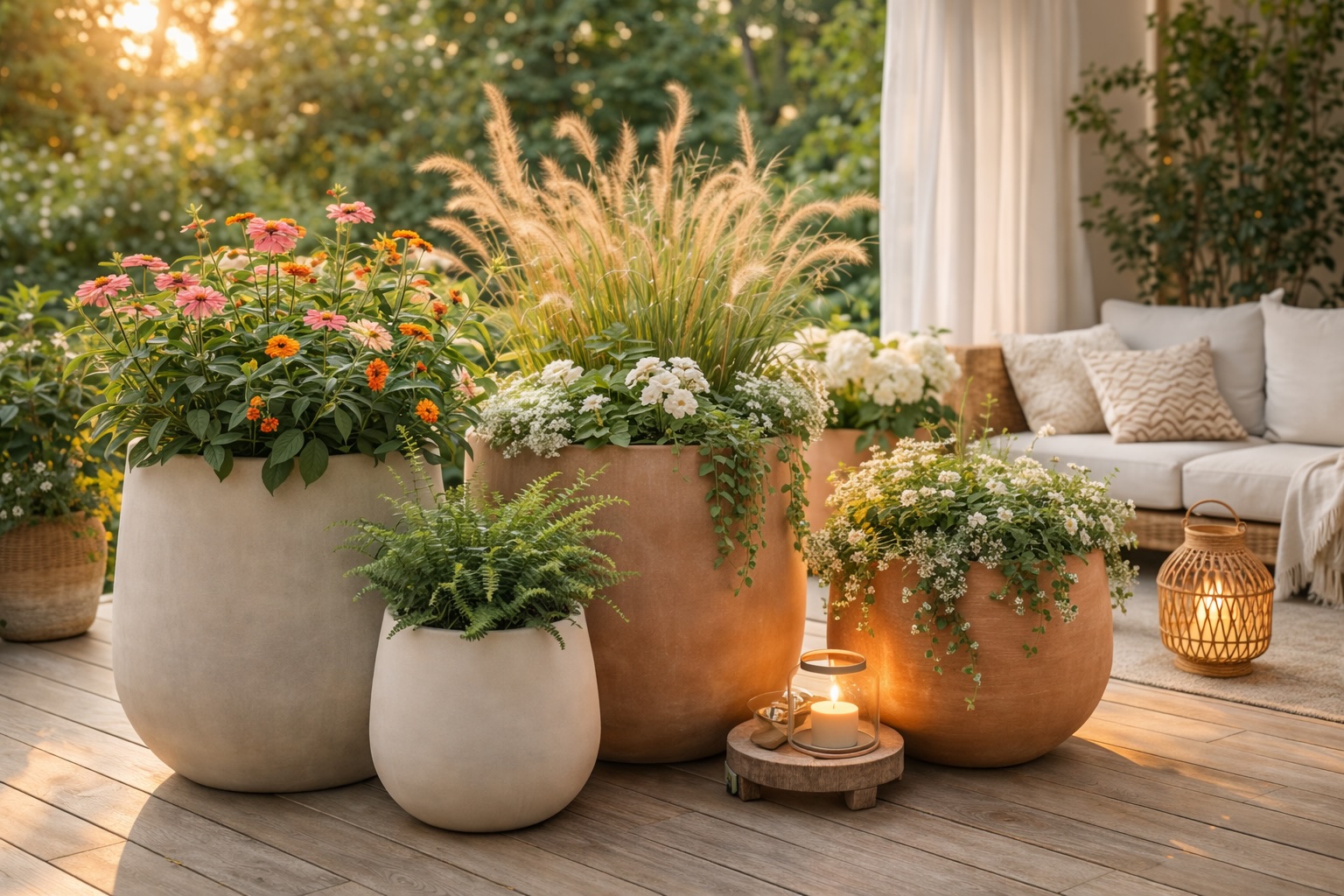
Best Outdoor Planters for Your Patio (Beautiful and Weatherproof)
The best outdoor planters for patios and gardens — materials, sizing, and our top picks for every style from boho to modern minimalist.
Outdoor planters do two things at once: they give your plants a home, and they give your patio a personality. The right planter in the right spot can transform a bare concrete slab into something that actually feels like a garden.
But with so many options — terracotta, fabric, fiberglass, metal, ceramic — it’s easy to end up with planters that look great in the store and crack after one winter, or that dry out too fast, or that are so heavy you can never move them.
Here’s what to actually look for.
The Most Important Thing: Drainage
No matter how beautiful a planter looks, if it doesn’t have drainage holes (or you can’t add them), your plants will likely struggle. Roots sitting in waterlogged soil rot fast.
Most quality planters come with drainage holes. If yours doesn’t, you have two options: drill holes yourself (works for many materials), or use the planter as a decorative outer shell and keep your plant in a nursery pot inside.
Material Guide: What to Expect
Terracotta: Classic, breathable, beautiful. The downside is that it’s heavy, breakable, and can crack in freezing temperatures if it absorbs water. Best in mild climates or moved indoors for winter.
Fiberglass: The modern workhorse of outdoor planters. Lightweight, frost-resistant, and can be made to look like stone, concrete, or terracotta at a fraction of the weight. Easy to move. Great for large planters.
Fabric grow bags: Surprisingly effective for edibles — excellent drainage, air-prunes roots for healthier plants, folds flat for storage. Less decorative but very practical, especially for vegetable gardening.
Glazed ceramic: Beautiful, weighty, and adds real color to a patio. More durable than terracotta but still vulnerable to hard freezes. Heavy once planted — plan where they go before you fill them.
Metal/galvanized: Corrugated metal troughs and galvanized buckets have had a major moment in garden design. Durable, ages attractively, but can heat up in direct sun and cook roots — best for shade or partial shade positions, or lined with fabric.
Lightweight concrete/hypertufa: The designer’s choice for a modern look. Durable, frost-resistant when made well, and genuinely beautiful. More expensive.
Sizing: Think Bigger Than You Think You Need
The most common planter mistake is buying too small. A plant in a too-small container runs out of root space quickly, dries out in hours rather than days, and struggles.
For most outdoor perennials and ornamental grasses: at least 12 inches deep and wide. For shrubs or statement plants: 18–24 inches or larger. For tomatoes and larger vegetables: 5 gallons minimum, ideally 10–15 gallons.
When in doubt, go up a size. A larger planter also retains moisture longer, which means less watering.
Styling Planters on a Patio
Use odd numbers: Like interior decorating, groups of three or five planters look more natural than pairs or even numbers. Two identical planters flanking a door is the exception — symmetry works there.
Vary the height: A combination of tall, medium, and low planters creates visual interest. A single tall planter with a dramatic plant (ornamental grass, bamboo, a standard topiary) works as a focal point.
Color and material cohesion: You don’t need all matching planters, but staying within two or three materials and a similar color family ties the look together. Terracotta and aged wood, for example, or all-black with different shapes and sizes.
Fill the space: An underfilled planter (a small plant rattling around in a big pot) looks sad. Either plant densely (combine a thriller, a filler, and a spiller — tall plant, bushy plant, trailing plant) or wait until the plant grows in.
Our Top Picks

Large Fiberglass Planter (18 inch)
Lightweight, frost-resistant, and looks like real concrete — perfect for a statement plant without the back-breaking weight.
🛒 Shop on Amazon
Terracotta Planter Set (3 sizes)
Classic terracotta in three heights — group them together for an instantly styled patio corner.
🛒 Shop on Amazon
Fabric Grow Bags (5-Pack)
Best drainage, healthiest roots, folds flat for storage — ideal for vegetables, herbs, and edibles.
🛒 Shop on Amazon
Glazed Ceramic Planter (Sage Green)
Rich color and a beautiful glaze — a single statement planter that elevates any patio instantly.
🛒 Shop on Amazon
Tall Modern Planter (24 inch)
A floor-standing planter for grasses, bamboo, or tall perennials — adds height and drama to any outdoor space.
🛒 Shop on AmazonFAQ
What outdoor planters are frost-proof?
Fiberglass, high-fired glazed stoneware, and resin planters handle frost best. Standard terracotta and low-fired ceramics can crack when water inside freezes and expands. If you’re in a freeze climate, look for planters specifically labeled frost-resistant or move terracotta indoors for winter.
How big should outdoor planters be?
For most ornamental plants, at least 12 inches deep and wide. For shrubs or large perennials, 18–24 inches. Bigger is almost always better — more root space, more moisture retention, healthier plants.
Do outdoor planters need holes?
Yes — drainage holes are essential for outdoor planters unless you’re growing aquatic plants or using a planter as a decorative cache pot. Without drainage, soil stays waterlogged, roots rot, and plants die. Most quality outdoor planters include drainage holes.
What to plant in large outdoor planters?
Large planters work beautifully with ornamental grasses, flowering shrubs, small trees (standard bay or olive, for example), or the classic “thriller, filler, spiller” combination: a tall statement plant, dense mid-level planting, and something trailing over the edge.
How do I keep outdoor planters from tipping over?
Use a heavy base material (stones, sand, or water-drainage plastic) at the bottom before adding soil — this lowers the center of gravity. For very tall planters, consider staking into the ground if possible, or positioning against a wall.
Your Patio Deserves Real Plants
A patio with well-planted, well-chosen planters feels completely different from one without. You don’t need a garden — just a few good containers, decent compost, and plants that suit your light conditions.
Start with one or two large statement planters rather than a dozen small ones. It’s a more dramatic effect, easier to maintain, and looks more intentional.
Tags: